
A growing library changes what you need
With a handful of audiobooks, a cover grid gets you a long way. Once the collection spreads across authors, series and libraries, finding the right thing becomes a bigger part of using the app.
ShelfPlayer’s search and organization tools are a good reason to consider it. You can search across connected libraries, bring them together in Listen Now, and create or edit collections and playlists from the phone. If you like building reading queues for a trip, a topic or a particular mood, that’s useful work to be able to do without returning to the server’s web interface.
SoundLeaf approaches the collection through its Library tab. Books, Series, Authors, Genres and Collections each offer a way in. Switch between the available lists, grids and shelves depending on whether you’re looking for a known title or choosing by its cover. The aim is to make the collection inviting to browse, including when you haven’t decided what’s next.
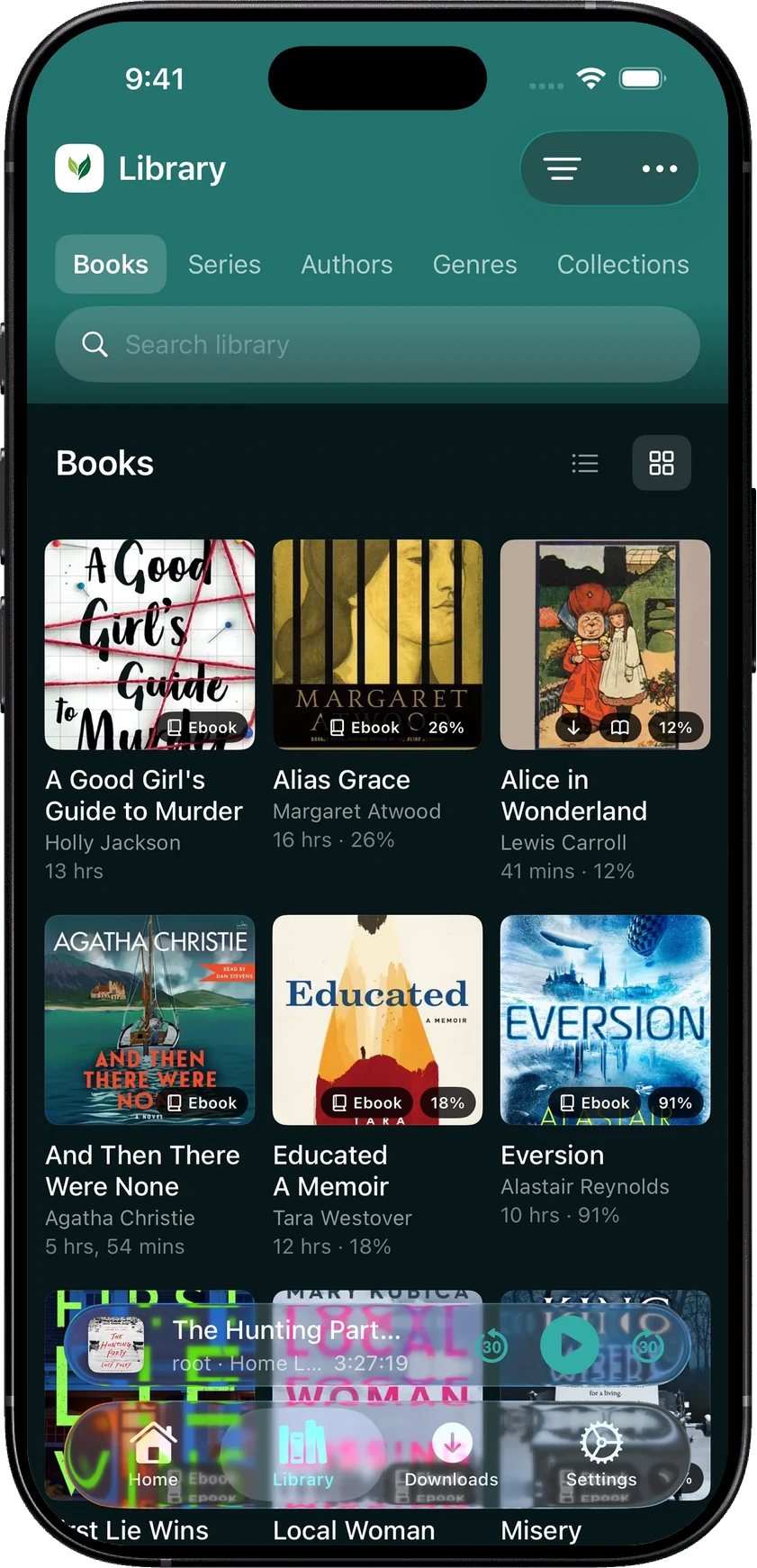
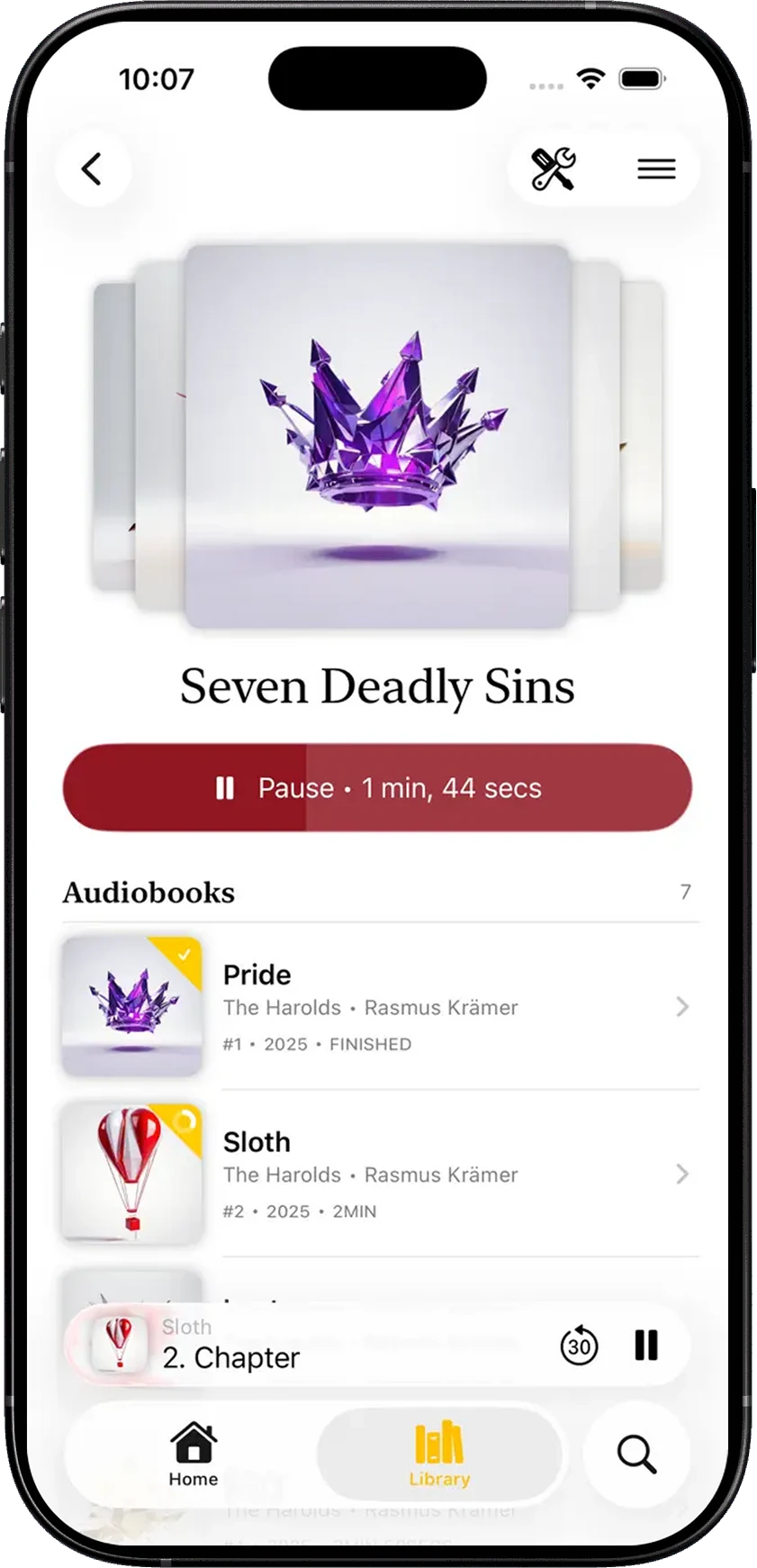
ShelfPlayer is the stronger fit here for someone who frequently edits playlists. SoundLeaf is worth trying if the pleasure is in exploring the books you’ve already collected.
The subscription is a real difference
ShelfPlayer’s subscription covers offline listening and several everyday player features, including playback speeds beyond 1×, bookmarks, queues and the full sleep timer. That makes the recurring purchase part of the decision, rather than an optional change of appearance.
SoundLeaf includes manual downloads and playback controls for free. Its EPUB reader, podcast auto-download and Watch app are free too. Pro is a one-time purchase for audiobook Smart Downloads and premium themes and icons; the optional yearly Supporter plan adds its own themes and icon collections.
If you already bought ShelfPlayer under an older offer, check what your account includes before deciding. For someone starting fresh, SoundLeaf lets you download a book and use it through a normal day without choosing a subscription first.
There’s also a device consideration: ShelfPlayer requires iOS 26, while SoundLeaf supports iOS 17.6 and later. An older listening phone may decide this comparison before either app’s library layout does.
The booklet and the book itself
ShelfPlayer can open attached PDFs. That’s handy for a nonfiction audiobook with charts, or a novel with a map you want to keep nearby.
SoundLeaf opens the EPUB attached to the book. With Read Along, the words highlight and the page turns as the narrator advances. You can follow a difficult passage, check how a name is spelled, or stop listening and read quietly. Font, spacing and page color can be set separately from the app theme.
It works with matching text and narration, with synchronization on the iPhone. A different edition or an abridged recording can make the match unreliable. For the books where it fits, the text becomes something you can use throughout the audiobook, rather than an attachment you open once.
Give each podcast its own rules
Both apps have substantial podcast support. ShelfPlayer brings shows and episodes into its wider library search and Listen Now experience. That makes sense if you want a single place to find whatever you’re currently following.
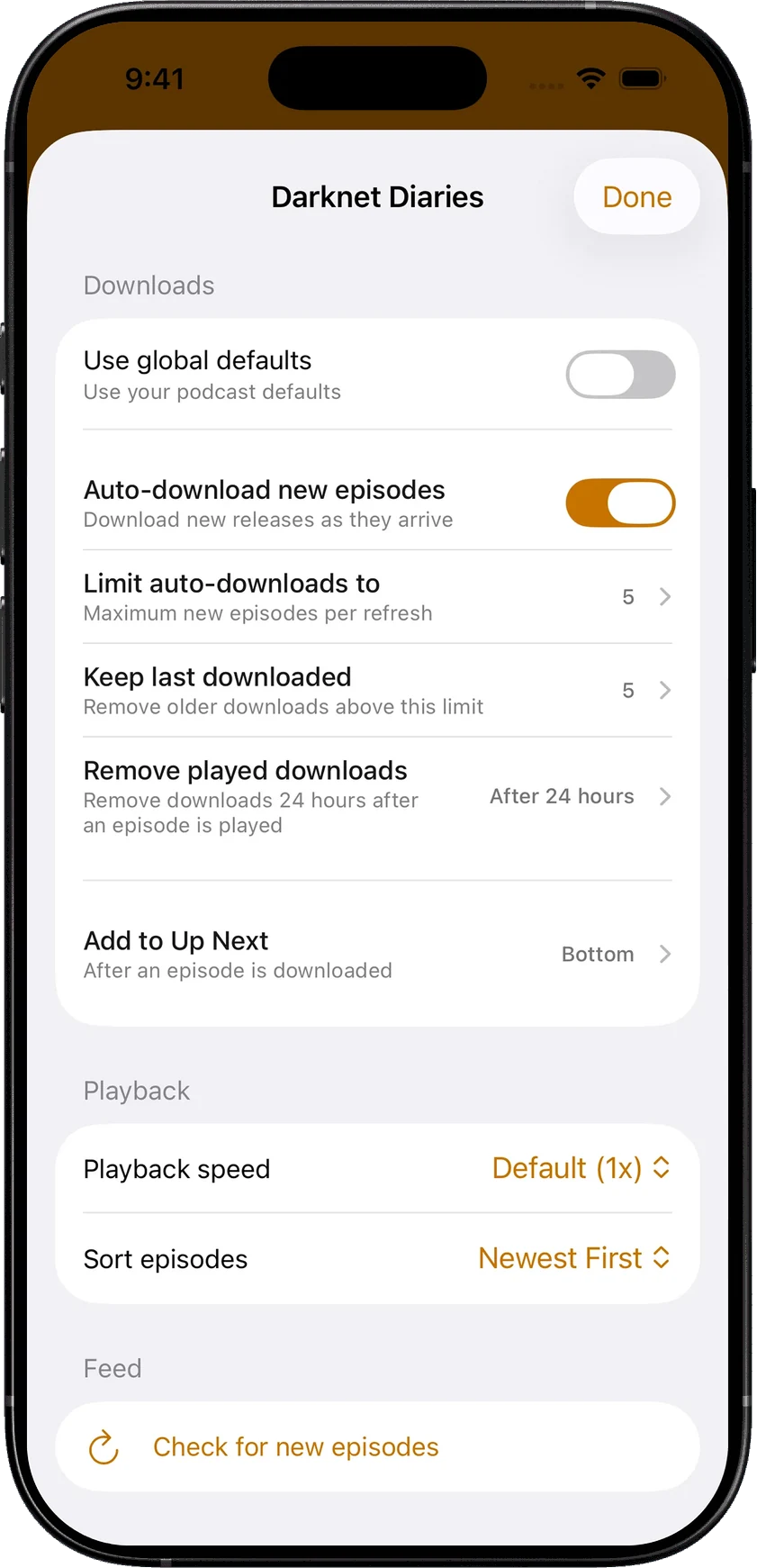
SoundLeaf gives podcasts a separate home, queue and downloaded view. A show can use a different speed, episode order and download policy from its neighbors. Keep a few recent news episodes, remove played downloads after a delay, and let new downloads join Up Next where you want them.
Publisher-supplied timed transcripts are another useful part of SoundLeaf’s podcast experience. They follow the spoken audio and stay with downloaded episodes, so you can return to a quote or pick out a name without replaying the whole conversation.
Make room for how you actually listen
ShelfPlayer suits the person who wants to manage their collection from the phone: searching across libraries, editing playlists and deciding what comes next. Its organization tools may be worth a subscription if that’s a regular part of your routine.
SoundLeaf suits the person who wants the library to remain useful away from the server, the text beside the narration, and podcasts with their own settings. Downloaded audio keeps playing offline, while library information stays available on the phone. Your progress syncs back when the server is reachable again.
You can try either with your existing Audiobookshelf account. Let the current app sync before switching, then download the book in the new one. The collection stays on your server; the daily experience is yours to choose.